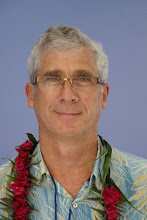
This is a blog post long, long overdue. I've been meaning to write a post about two of our volunteers, Darryl and Jeff for sometime and you'll soon understand why.
We are grateful for all our hundred volunteers from different churches and the community, but we are particularly grateful for Darryl and Jeff who have been with us every Sunday for over two years. That's a long time! Each and every Sunday Darryl and Jeff arrive at 11:30am helping to prepare the food we receive from many places, helping organize the volunteers, serving the homeless, planning for the week ahead, and assuring that everything on the food side of the house runs smoothly. It's an endless, thankless task, and yet these two gentlemen perform a terrific job with dignity, grace and love. It's high time we say a great big "thanks" and "well done"!
Darryl and Jeff do an amazing job with both passion and excellence. In true humility they are committed to being "servants" and to work behind the scenes. Yet they are both responsible for ensuring that food is ready, properly prepared, served, and that there are enough supplies for the next week.
We could not perform this valuable ministry without their generosity of time, and commitment to hard work. They are both a blessing to our ministry, and a crucial part of the ministry. We are grateful for your many gifts. In true Celtic fashion, you welcome the stranger and make him and her feel like an important guest.
Thanks guys for all your hard work from the staff of St. Aidans!
Monday, August 9, 2010
Tuesday, August 3, 2010
The Narnia Code: Revd. Michael Ward
Every year I receive an Alumnus Chronicle from the University of St. Andrews. These are always a great joy to read and give me the opportunity to think back as well as catch up with new events. This year I noted a fascinating sketch about the Rev. Michael Ward, a priest in the Church of England, who is also a Chaplain at St. Peter's College, Oxford. He did his PhD at St. Andrews on C.S. Lewis and is the author of Planet Narnia (2008) a book which is shaking the foundation of Lewis studies, and revolutionizing the way people understand the Narnia series. My own interest in Lewis begged me to ask for more, to contact Rev. Michael Ward, and write this article.
Ward claims to have discovered a secret code in Lewis's fictional series The Narnia Chronicles (1950-1956). In detective like fashion, Ward believes he has unearthed the governing scheme behind the Chronicles. The discovery came when Ward was reading Lewis's The Discarded Image (1964), one of Lewis's finest academic books which describes the medieval cosmology and worldview. There Lewis discusses the medieval image of the seven heavens which contains the seven planets which revolve around the earth, and also influence the earth, including its people. These "planets" included the Moon, Mercury, Venus, the Sun, Mars, Jupiter, and Saturn.
According to Ward, these "planets" are the backdrop to the Narnian world. Each book corresponds to one of the planets. This is a fascinating idea because this dimension adds another layer of depth to the books. Turns out the Chronciles are much more sophisticated then we ever thought.
How does this play out in the books themselves? Jupiter, the "King" of the planets is featured in The Lion, Witch and the Wardrobe in Aslan. Mars, the planet of war, is central to Prince Caspian, where a civil war erputs. The Sun has a key role in The Voyage of the Dawn Treader, where the ship sails in the direction of the sun. The moon is central in The Silver Chair, and silver was believed to be the medal of the moon. And so on. We should not be surprized at all by this imagery and multi-layered quality to The Chronicles. Lewis was a medieval scholar and he was known to delight in keeping secrets.
To learn more abot Rev. Ward, and find out more about his discoveries, you can visit his website which is linked here. There is also a fascinating clip on Youtube where Rev. Ward shares more about his discovers and can be viewed here.
According to Ward, these "planets" are the backdrop to the Narnian world. Each book corresponds to one of the planets. This is a fascinating idea because this dimension adds another layer of depth to the books. Turns out the Chronciles are much more sophisticated then we ever thought.
How does this play out in the books themselves? Jupiter, the "King" of the planets is featured in The Lion, Witch and the Wardrobe in Aslan. Mars, the planet of war, is central to Prince Caspian, where a civil war erputs. The Sun has a key role in The Voyage of the Dawn Treader, where the ship sails in the direction of the sun. The moon is central in The Silver Chair, and silver was believed to be the medal of the moon. And so on. We should not be surprized at all by this imagery and multi-layered quality to The Chronicles. Lewis was a medieval scholar and he was known to delight in keeping secrets.
To learn more abot Rev. Ward, and find out more about his discoveries, you can visit his website which is linked here. There is also a fascinating clip on Youtube where Rev. Ward shares more about his discovers and can be viewed here.
Labels:
Celtic books,
Celtic Saints,
Continuing education,
journey
Thursday, July 29, 2010
Pirates of the Carribean 4 : In my backyard
I've seen some strange things in my day but this recent one might top the list. Last week I noticed there was an odd looking vessel floating on the bay. It had the shape of an old pirate ship, but whoever thinks that one would ever see one. I mean really! And that's what it was.
Landlubber that I am, I soon realized it was the pirate ship featured in the film series Pirates of the Carribean. As you can imagine, the film has created a ton of energy and excitement in these parts of Hawaii. I like to invite you to see some of the sights and share some of the local impressions.
Part of Pirates is being filmed off a small dock called Keeia Kea, a small out of the way harbour about two miles from my home. Been there a dozen times to fish, or to picnic with my wife. The dock is transformed. They've been filming at night, so when it gets dark, giant lights lighten up a huge part of the bay. And man-made smoke casts an errie sight on the surrounding volcanic hills. It's really something to see.
Last night curiousity got the best of me. I ventured out at 9pm to check things out. I was surprized when I got to Keeia Kea. There were so many people there I had to park about five minutes away from the dock. And once there, I had pass a few checkpoints and hundreds of people, who were lined up hoping to spot either Johnny Depp (Jack Sparrow), or Angelica (Penelope Cruz) drive by.
This was the first time I've been near a movie set, so it fascinating to see just what goes on. There was a certain energy and excitement there. Kind of reminded me of a circus. I was impressed just how organized things were, and in particular of the support services. On one side of the dock were a dozen trailers which provided food, carpenters-anything that could support the production of the movie. There was even a food tent. Anything a pirate would want.
The coolest thing was the ship itself. I travelled back to Keeia after work today, just to snap a few pictures of the ship. I ran into a smaller crowd, and there was a viewing area about fity yards from the ship.
I provide these as evidence and to let you know I was not telling a tall tale!
Saturday, July 17, 2010
The Celtic Way of Doing Church
"First, a host of New Barbarians substantially populate the Western world once again; indeed, they are all around us. Many of them are "secular"; that is they have never been substantially influenced by the Christian religion; they have no Christian memory and no church to "return" to. Many have never acquired a "church etiquette" (they would not know when to stand, or where to find Second Corinthians, or what to say to the pastor after the service)...these populations are increasingly simlar to the populations that the movements of Patrick, Columba, and Aidan reached as the New Barbarians become increasingly postmodern" (pg. 96)
I first read George Hunter's The Celtic Way of Evangelism (2000) in 2002. The book made a big impression on me, and was one of the first books that got me hooked onto Celtic Christianity. This is an important book, and I often go back and reread sections just to make sure I'm reading it right. There is something distinctive about Celtic Christianity, and Hunter's book does an excellent job in explaining what that "distinctiveness" is. Hunter begins his story by focusing on the uniqueness of Patrick's mission to the Irish. The "single greatest lesson" is that Patrick went out of his way to understand everything he could about the Irish. He took an active interest in the Irish people, taking the time to learn and understand their language, their habits, their thought forms, and their culture. I've lived in other cultures and these graces are not easy ones. Patrick demonstrates an amazing humility, and understood that to be effective and make a real impact, he had to be both genuine and sincere. Patrick had all these qualities and more
Secondly, Celtic Christianity was more of a movement, a way of life, an "experience" instead of a religion of Empire, or something linked to an institution or church building. Moreover, the movement stressed the importance of the laity and not the clergy. Hunter remarks that the Roman visitor would have encountered a faith group which was more imaginative, less brain centered that Latin Christianity. The Celts also had a creation based theology which stressed the "immanence" and "providence" of God. A major reason for these differences were the Celtic roots in Desert and Monastic Christianity. Celtic Christian communities were focused around the monastery and abbot instead of the bishop and cathedral. Monastic communities tended to be less individualistic and more community orientated. Hunter believes the Celts communities were better integrated and focused not only on the "utlimate" issues of life, but also the "middle-level" issues of life, including life's daily struggles.
Hunter also explores the "missionary ecclesiology" of this ancient church and identifies five themes. First, the Celts took a relational, and team approach when sharing their faith story. Before sharing the message of the gospel, they first tried to relate to the people, identify with the people, and engage in friendship, ministry and witness. What a sharp contrast to the confrontational evangelism often practiced in the church both then and now. Second, monastic communities helped prepare people to live with depth and compassion. The Celtic communities were places of great learning, an Open Univeristy with ongoing adult education hundreds of years ago. Hunter also asserts that Celtic Christianity helped prepare people through a "fivefold" structure of experiences including almost every realm of life. These stages included voluntary periods of solitary isolation, time with a "soul-friend" (spiritual direction), time in small groups in a monastic setting, participation in the common life such as meals and prayers, and an environment where people were seeing ministry all around them. These were vibrant, rich faith communities, where learning, art, poetry, and storytelling were all valued. Hunter also notes how important hospitality was in the Celtic monastic community. Celtic communities were welcoming ones. Within many of the monasteries, a place was always set for a guests and seekers who come to the community.
The sharing of one's faith is important and needs to be done tactfully. As the Christian Church huddles, and reviews its standing in the world, it would be wise to look to lessons of the past, and learn how one church, the Celtic church, took new and bold steps centuries ago. For instance, there are several clear "takeaways" people can apply to their own churches. In true Celtic fashion, how welcoming is your church to newcomers and strangers? And second, if you have congregations with different ethnic backgrounds, what is being done to help understand their culture? If you're looking for a blueprint on how "to do" church in our own day, you'll find The Celtic Way of Evangelism worthwhile to read.
Labels:
Celtic books,
Celtic churches,
Celtic monks,
Celtic Spirituality,
MIssion,
Patrick
Tuesday, July 13, 2010
St. Andrews and the Open
"St. Andrews by the Northern Sea,
That is a haunted town to me!"
Andrew Lang
Every five years, the tiny university town of St. Andrews, Scotland is transformed into the greatest golf show on earth when it hosts the British Open, or "the Open" as the Brits fondly call it. But what else would you expect of the "home of golf" located on the isolated shores of the East Neuk of the kingdom of Fife.
I was fortunate enough to spend two and a half years at the University of St. Andrews where I studied the Victorian novel and escaped with an M.Phil. And what a great town, and a great time that was! St. Andrews is the third oldest University in Britain, behind Oxford and Cambridge, and the oldest in Scotland. Nothing about St. Andrews disappointed, except perhaps the drab weather, and endless stream of brussel sprouts that adorn almost every dish. But who's complaining. I got a great education!
St. Andrews is such an interesting place because there is so much of important Scottish history wrapped up in the town, and it reeks of history, and significance. There is the University and students to this day, wear bright red gowns to class, or black if you are studying divinity. St. Andrews was also the ecclesiatical capital of Scotland, and the ruins of what once was a magnificent cathedral remind you of this proud past. The town is also linked with the father of the Scottish Reformation, John Knox, who was once imprisoned there.
And then of course there is golf. St. Andrews, the "home" of golf, is the place where the sport began, and where many a player come and dream of playing and winning golf's most famous tourament. Ironically the American golfer, Arnold Palmer, rescued the Open from obscurity, helping to shape it into what it is today. Palmer encouraged other golfers to take the trip and over time the tourament grew in popularity. One of my fondest St. Andrews memories, was of the Open of 1984. It's the only golfing major I've ever attended, and I recall bright sunny weather, colors and golf stands both near and far. On the last day, a group of us were lucky enough to be sitting at the 17th hole where the eventual winner, Seve Ballesteros was able to make some magical shots to win the prized Claret Jug.
This week, the Open is again being hosted at St. Andrews. Each time it is, I love to sit back and remember the old town, and University once more. I can't wait to see what the Old Course and Chapel look like once again.
Saturday, July 10, 2010
Carl McColman: Blogger, Author
Every few months, I like to take some time to pause, and devote a blog article to some of the major writers of Celtic Spirituality today. This morning I want to share an interview I conducted with Carl McColman, who is a well known blogger and writer on the Celtic tradition.
I was first introduced to Carl through his blog "Anamchara, The Website of Unknowing" which is linked here. "Anamchara" (which is Gaelic for "soulfriend") is one of my favorite blogs and has the robust task of covering the great mystical writers in the Celtic and Christian traditions. A tall order if there was ever one. The blog is a gem, and I can assure you that once you visit "Anamchara" you will soon find yourself adding it to your favorite list, and stopping by several times a week as I do.
Carl is not just a blogger, but he is also a serious writer of spiritual topics and has something important to say. The mission of the blog is "to explore the spiritual life". Anamchara tackles many different issues related to Christian mysticism and to the emerging church. For example, you will find page after page dedicated to specific Celtic and Christian saints, with pithy and delicious quotes. Many a morning, I have sat with a cup of Hawaiian coffee in hand, music in the background, or better yet in silence, reading, reflecting and praying over some of the best that has been thought and said by the Christian mystics. You find yourself reading quotes and stories from mystics that are household names such as Evelyn Underhill, and learning about others you don't know such as Walter Hilton. Either way, you'll find yourself coming back for more of these mindwakers, again, again and again.
Carl has had an interesting spiritual journey, with some pretty unique credentials. His own path has taken him through a variety of spiritualities and along the way Carl has written books on Wicca, Druidism, Paganism, and most recently on Christian Mysticism. I've read two of those books, The Complete Idiot's Guide to Paganism (2002), and The Complete Idiot's Guide to Celtic Wisdom (2003) and found both to be great introductions to difficult subjects. Carl is imminently qualified and "experienced" to be writing on these issues. Along the way, Carl was a leader of a druid grove. Now, Carl works in a bookstore in a Cistercian monastery where he is a "monastic associate". How cool is that!
As a fellow blogger, I had to ask Carl about his blogging habits. He responded, "I try to live a regular life. I work, I have a family. I spend time in silence and contemplation. I like to write best in the morning. And when I haven't been able to write or blog, like today, I feel the same way as when I haven't showered or brushed my teeth". Not sure I'm at that point yet, but I know exactly what he means.
Our discussion then turned to the Celtic tradition and why it is so popular today. Carl noted "The Celtic or Insular tradition has many things to offer today. It's use of language, the storytelling tradition, devotion to the natural world, beauty...and by beauty I mean art...the high crosses at the monasteries, the Books of Kells, the Ardagh Chalice. It was a great flowering of both saints and culture. Some have tried to construct Celtic spirituality into something romantic and something it never was. Like all spiritual traditions, the Insural traditon was a mixture of light and shadow...even so, a wonderful tradition". Favorite Celtic saints include Kevin, Brigit, and George MacLeod, the founder of the Iona Community. A side bar was a discussion of what Celtic Christianity looks like in the world today. Carl spoke of the inner city work in Glasgow that the Iona Community is doing.
Part of Carl's personal call, is to help spread the message that Christian mysticism is for everyone. He remarked, "I call myself an aspiring mystic, and live as a Christian who tries to conduct my life by following the mystical path. Many Christians aren't familiar with the Christian mystical tradition or think it's reserved for the few, like the Marines. Part of my work is to bring more people into the conversation". And reading Carl's blog and books will do just that. You will find yourself gently brought in and welcomed as guests in true Celtic fashion.
Carl's most recent book, just hitting bookstores now, is The Big Book of Christian Mysticism (2010). I've provided the link to Amazon here so you can check it out and hopefully purchase it. The Big Book took three years to write and I can tell you that it will be the best $15 you will spend this year. If you don't know anything about the long Christian mystical tradition, the book will provide you with an wonderful and inspiring introduction. It may change your world as well as your Christian experience. Carl rightly calls, Christian mysticism "the best kept secret of the Christian Church" and who better to tell that story than one who has been living and writing about it, both in blog and book, for nearly a decade.
Wednesday, July 7, 2010
The Next Christendom
I had some extra time last week and was able to browse through a book I've been wanting to read for some time. Philip Jenkins's The Next Christendom (2002 created a stir when it was first published in 2002 and then reissued in 2007.
Funny, but having leafed through The Next Christendom I was surprized by what all the stirring was about. Instead it confirmed trends and experiences I have encountered in ten years of active ministry. Nothing shocking here.
What does the book say? Jenkins argues that by the year 2050, the Christian church and landscape is going to be very different than is now. By 2050, only one Christian in five will be non-Latino and white. Moreover, the center of the Christian world will be in the Southern Hemisphere, and not the United States and Europe. White Christendom better get ready!
The Christian Church of the future, waxes Jenkins, will be predominantly orthodox, conservative, and even apocalyptic. Typical of some of the younger churches, there will be elements of mysticism, puritanism, faith-healing, and dream-visions. However, here follows a big shift from the present scene. A majority of the Christians will be people of color, poor, live in poverty and persecution, and many will look to the church for comfort and to make sense of their suffering.
The changes are going to be drastic. A Western based, intellectual liberal tradition will continue to exist, but gradually be dwarfed by the Church of the South. And the church will predominantly consist of the poor. There will be ramifications for the clergy too. We will no doubt see a change in the way clergy are trained, and many perhaps will be paid small amounts, if anything at all.
It's errie how Jenkins describes what I see taking place in Hawaii. Many of the traditional churches have graying and shrinking memberships. Many area already experiencing financials problems. A majority of mainlain denominations are in decline, and their future is not certain by any means. Yet many of the churches that are growing consist of the newly arrived to these island, the Chuuk (in our own experience at St. Aidan's), the Marshallese, and the Vietnamese, just to name a few. At the same time, it is an exciting time to see God at work in the world, moving the center of Christendom to a different part of the globe. And to think that many of us "restricted" God to Germany, Britain, Ireland, or the United States for that matter. Who were we kidding?
Most of us fear change, and what we are encountering is a shift in the theological winds if you will. Yet as good history students we need to recall these themes are something followers of the Celtic way are familar and comfortable with. In our own spiritual tradition, we understand that God is not limited to or defined by our own experience, or to a church building, or even to a Holy Book. Our God is a Living God who almost always seems to wonderfully elude our grasp and best of intentions. Try to pin God down, and we are sure to be disappointed. This is what some of the Celtic writers meant when they refered to the "wild" side of God, likening Him to a wild goose. In slightly different language, it is impossible to try and tame God. Instead, He tames us. We are wrong to think that "we have Him". Rather "He has us".
The wind of His Spirit is blowing now, taking His Church in different directions. As Jenkins reminds us, we have nothing to fear as Christianity has always demonstrated the ability to transform weaknesses into strengths.
Subscribe to:
Posts (Atom)
rd