Showing posts with label Celtic monks. Show all posts

Sunday, July 3, 2011

Celtic Fire


"In every church and monastery of Celtic Britain and Ireland a fire was kept burning, day and night, summer and winter, as a sign of God's presence...While the rest of Europe was entering a dark age of conflict and division, after the fall of the Roman Empire, the Christian gospel was lighting the hearts of the rugged Celtic tribesman, and thousands upon thousands of simple men and women became monks and missionaries, poets and pilgrims, ablaze with the love of Christ" (1-2).


Celtic Fire is a wonderful book, and a fine introduction to Celtic Christianity. The book contains a selection of writings from ancient Britain and Ireland and is skillfully presented by the Revd. Robert Van De Weyer, an Anglican priest who has written often on Celtic themes.

Celtic Fire begins with a sparkling 25 page essay providing readers with an overview of some of the uniqueness features of Celtic Christianity including the Druids, Desert Fathers, and the theology of Pelagius. The bulk of the book contains an anthology which highlights many of the famous people and literature in Celtic Christianity. For example, there are hagiographical sections which include the Confession of Patrick, the voyage of St. Brendan, Aidan, Hilda, and others. The "highlites" of their lives are presented and are well worth reading.

Another section contains some the better known prayers generated the Celtic saints. It's evening now as I write and let me recite a prayer entitled "Covering the Fire":

Lord, preserve the fire, as Christ preseves us all. Lord, may its warmth reamin in our midst, as Christ is always among us. Lord, may it rise to life in the morning, as we shall rise with Christ to eternal life." (147).

I love these kind of prayers and it reminds of just how tied to Nature and the Seasons of Life the Celts were. We moderns seem to have lost these  kinds of attachments.

One of the most interesting sections in Celtic Fire is the latter part of the book which shares some unique Celtic literary devices. A popular Welsh literary form was the "gnome" a maxim which was preceded by an unrelated image. Reading them, I am reminded of Zen "koans". Let me share a few:

"Red is the cock's comb, and loud his voice. God praises man when man praises God".

"Delightful are the tops of gorse bushes, their blossom reflects the brightness of the sun. None can know the truth except God".

The Irish also had some unique literary devices. A "triad", or mnemonic, was used to express moral and spiritual truths. I find these to be very clever and witty and its easy to picture monks dreaming up these pithy sayings.

"Three sources of new life: a woman's belly, a hen's egg, a wrong forgiven".

"Three people whose ears are closed: a king bent on conquest, a merchent bent on profit, a monk who thinks himself holy".  

"Three things that unlock the secrets of the soul: heavy drinking, violent anger, innocent trust".

I hope this wets your appetite for more. Celtic Fire reminds us that the divine spirit is living everywhere, and in every living creature, and in the world around us. And like olden times, the lives of the Celtic saints can be a light of brightness for us again.

Sunday, January 23, 2011

Book review of The Language of Silence


One of the deep themes in Celtic spirituality is the desert tradition from Egypt which includes such towering figures as Antony and the desert fathers and mothers. Follow this rustic path and envitably one discovers the Camaldolese tradition, a strict form of the Benedictines which emphasizes solitude and separation. Peter-Damian Belisle's The Language of Silence (2003) provides an excellent starting point for anyone interested in learning more about the Camaldonese tradition. The book is part of the Traditions of Chrisitan Spirituality Series, a series which has a wonderful volume on Celtic Spirituality entitled Journeys on the Edges: The Celtic Tradition featured earlier on this blog. A warning. These books are like candy. Eat one, and you will want to devour them all. These are well written and provide wonderful snapshots of great Christian spiritual traditions. To my surprize, I've already read five other volumes including ones on the Dominicans, Franciscans, Benedictines and Cistercians. 

Belisle's book is focused around the theme of "the monk within", a theme I might add that we also encountered in Ed Sellner's book Finding the Monk Within (2008). Belisle writes: "We are all drawn inward, towards the centre of existence. We come to know ourselves as drawn into a presence. Solitude ushers us into presence, towards which the language of silence is most attentive. If we find ourselves in relation that presence at the centre of our being, we will move our hearts, indeed, our lives, outwardly in solidarity with all our brothers and sisters througout the world" (pgs. 171-2.)

The book outlines how solitude is a longstanding theme in God's holy history-since forever. Solitude has always been an important ingredient of the spiritual  life, featured in Old and New Testaments and throughout the history of the Christian Church. Belisle seems to be tapping the modern reader on the shoulder saying "listen up to this ancient Christian practice, you might just learn something"!

A survey of Old and New Testament figures includes Moses, Elijah, John the Baptist, Jesus and Mary and stresses the solitary in each. A pivital chapter on Athanasius's Life of Anthony is a must for all Protestant leaning readers, followed by a section on the desert solitaries. The tour of solitude moves then to several of the great Patristic writers including Basil the Great and John Cassian. There are also chapters on Benedict of Nursia and notably writers in the Camaldolese, Carthusian and Cistercian traditions. A final chapter includes fascinating portrayals of contemporary solitudes including Charles de Foucauld, Dorothy Day and others. This is an impressive list of folks, all weaned in the school of silence. We would do well to listen.

The Language of Silence provides an excellent starting point for anyone interested in contemplation, and monastic solitude. Lets face it, we live in an age which features a noisy, wordy world, and noisy, wordy Christianity. And with all this noise, when does one really have the time to listen for that still, small voice? This book makes the convincing case that a different way, perhaps even a better way can be found within the walls of quiet reflection and solitude. This is how God has worked in the past, and this is how God works today. It is a compelling challenge to our noisy and gadgety culture. Another case of addition by subtraction.

On the negative side, The Language of Silence may try to cover too much ground in one swoop-there are a ton of personalities presented here, too many in fact. I think it would have been more effective to have longer chapters on fewer individuals. Yet even so, along the way, one may find a hermit that one can relate to.

We all have a "monk within" and this book helps us to answer how we can nurture and develop that important side to our spiritual personality.

Saturday, November 13, 2010

Thomas Merton's Wisdom of the Desert


Thomas Merton, that great Trappist monk, is an American treasure. Merton is a creative and wonderful writer, who wrote many important books on monasticism and spirituality. Today, I'd like to briefly discuss Merton's The Wisdom of the Desert (1960), one of Merton's shortest books, a collection really, and explain why the book is important from a Celtic perspective.

As I have discussed in other blog articles, Celtic Christianity derived part of its unique blend of spirituality from the Desert Fathers and Mothers, a group of monastics who had fled the "society" of Europe for the stern quietude of mid East. Men and women went there by the thousands. they must have been seen as unique centers of learning at the time. There were large monastic communities in Egypt, modern day Israel, and Arabia. These places offered an alternative to the popular Christianity of the day. Their stories circulated in the writings of Cassian and others and generated much interest. And herein demonstrates the breadth and adaptability of the Celtic view: blending the wisdom of the East with the Druidic vision on the home front as well. How difficult is that?

Merton's Wisdom of the Desert begins with a wonderful essay which sets the writings of the Desert Fathers in context. There Father Merton shares with us, that the Desert writers have always been one of his favorite group of writers, and that what follows is a collection of  his favorite "sayings". I went through the book this morning (it's only 81 pages long) and selected some of my favorite "sayings". These Zen like quotes tell us something about the spiritual experience of the Fathers and their desire to live authentic spiritual lives. For me, this is feature is the magnet of the book, which keeps me coming back for more.

Here are a few:

VII
A brother asked one of the elders, How does far of the Lord get into a man? And the elder said; If a man have humility and poverty, and judge not another, that is how fear of the Lord gets into him.

XIII
A certain brother went to Abbot Moses in Scete, and asked him for a good word. And the elder said to him; Go, sit in your cell, and your cell will teach you everything.

XXV
Abbot Pastor said: The virtue of a monk is made manifest by temptations.

XXVIII
An Elder said: Just as a tree cannot bear frut if it is often transplanted, so neither can a monk bear fruit if he frequently changes his abode.

XCIV
Once some robbers came into the monastery and said to one of the elders; We have come to take away everything that is in your cell. And he said: My sons, take all you want. So they took everything they could find in the cell and started off. But they left behind a little bad that was hidden in the cell. The elder picked it up and followed after them, crying out: My sons, take this, you forgot it in the cell! Amazed at the patience of the elder, they brought everything back into his cell and did penance, saying: This one really is a man of God!

These "sayings" invite us to an inner-directed Christianity which I think is needed today. "Go sit in your cell, and your cell will teach you everything"! In other words, you already possess in you, all that you need. One just has to ruminate! And it is my experience, this is what drives folks to be part of monastic communities today. To be more "real".

I love these "sayings" and reading them often sets off other thoughts. Check saying XXVIII, on the principle of stablity. St. Benedict later made this the backbone of his religious order, and helped to transform Europe. And how about saying XCIV? Ever seen that one before? Reminds me of that great scene in  Hugo's Les Miserables when Bishop Myriel gives his silver candlesticks to Jean Valigean. Who knows, maybe Hugo got his idea for that scene from here.

If you want more about the Desert Fathers and Mothers, check out Benedicta Ward's The Desert Fathers (2003).

Saturday, July 17, 2010

The Celtic Way of Doing Church


"First, a host of New Barbarians substantially populate the Western world once again; indeed, they are all around us. Many of them are "secular"; that is they have never been substantially influenced by the Christian religion; they have no Christian memory and no church to "return" to. Many have never acquired a "church etiquette" (they would not know when to stand, or where to find Second Corinthians, or what to say to the pastor after the service)...these populations are increasingly simlar to the populations that the movements of Patrick, Columba, and Aidan reached as the New Barbarians become increasingly postmodern" (pg. 96)

I first read George Hunter's The Celtic Way of Evangelism (2000) in 2002. The book made a big impression on me, and was one of the first books that got me hooked onto Celtic Christianity. This is an important book, and I often go back and reread sections just to make sure I'm reading it right. There is something distinctive about Celtic Christianity, and Hunter's book does an excellent job in explaining  what that "distinctiveness" is.  Hunter begins his story by focusing on the uniqueness of Patrick's mission to the Irish. The "single greatest lesson" is that Patrick went out of his way to understand everything he could about the Irish. He took an active interest in the Irish people, taking the time to learn and understand their language, their habits, their thought forms, and their culture. I've lived in other cultures and these graces are not easy ones. Patrick demonstrates an amazing humility, and  understood that to be effective and make a real impact, he had to be both genuine and sincere. Patrick had all these qualities and more

Secondly, Celtic Christianity was more of a movement, a way of life, an "experience" instead of a religion of Empire, or something linked to an institution or church building. Moreover, the movement stressed the importance of the laity and not the clergy. Hunter remarks that the Roman visitor would have encountered a faith group which was more imaginative, less brain centered that Latin Christianity.  The Celts also had a creation based theology which stressed the "immanence" and "providence" of God.  A major reason for these differences were the Celtic roots in Desert and Monastic Christianity. Celtic Christian communities were focused around the monastery and abbot instead of the bishop and cathedral. Monastic communities tended to be less individualistic and more community orientated. Hunter believes the Celts communities were better integrated and focused not only on the "utlimate" issues of life, but also the "middle-level" issues of life, including life's daily struggles.

Hunter also explores the "missionary ecclesiology" of this ancient church and identifies five themes. First, the Celts took a relational, and team approach when sharing their faith story. Before sharing the message of the gospel, they first tried to relate to the people, identify with the people, and engage in friendship, ministry and witness. What a sharp contrast to the confrontational evangelism often practiced in the church both then and now. Second, monastic communities helped prepare people to live with depth and compassion. The Celtic communities were places of great learning, an Open Univeristy with ongoing adult education hundreds of years ago. Hunter also asserts that Celtic Christianity helped prepare people through a "fivefold" structure of experiences including almost every realm of life. These stages included voluntary periods of solitary isolation, time with a "soul-friend" (spiritual direction), time in small groups in a monastic setting, participation in the common life such as meals and prayers, and an environment where people were seeing ministry all around them. These were vibrant, rich faith communities, where learning, art, poetry, and storytelling were all valued.  Hunter also notes how important hospitality was in the Celtic monastic community. Celtic communities were welcoming ones. Within many of the monasteries, a place was always set for a guests and seekers who come to the community.

The sharing of one's faith is important and needs to be done tactfully. As the Christian Church huddles, and reviews its standing in the world, it would be wise to look to lessons of the past, and learn how one church, the Celtic church,  took new and bold steps centuries ago. For instance, there are several clear "takeaways" people can apply to their own churches. In true Celtic fashion, how welcoming is your church to newcomers and strangers? And second, if you have congregations with different ethnic backgrounds, what is being done to help understand their culture? If you're looking for a blueprint on how "to do" church in our own day, you'll find The Celtic Way of Evangelism worthwhile to read.

Sunday, January 3, 2010

The Celtic Roots of Benedictine Spirituality

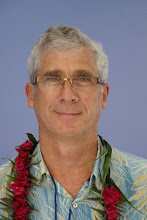
Last month, the abbot of the Benedictine Monastery in Hawaii, Fr. David, invited me to come and speak with the community and oblates. The oblates meet once a month for education and for training. I enjoy having the opportunity to speak with folks, and to share with them aspects of the Celtic tradition. This is an important story, and I am happy to share it. I weaved my presentation around the theme of "The Celtic Roots of Benedictine Spirituality". That subject allowed me to share some of the history and background of Celtic Christianity and to touch on many of the overlaps between both spiritual traditions. In one sense we're cousins, and Celtic spirituality played a role akin to John the Baptist, helping to prepare the way.

First of all, the monastery is located in the most perfect of settings; atop the mountains on the North Shore. One has to pass fields of sunflowers, and scores of peacocks and horses, before finally arriving at the monastery itself. Second, the community is so very welcoming and friendly. This is a perfect setting to have a retreat, or spiritual day away from one's usual daily chores. I met one woman who had been on retreat and you could tell that she loved the place, and was somewhat reluctant about returning home. If you could see the place, you would understand! If your in Hawaii, or even visiting, you should go.

I closed the presentation by citing some passages from Morris Berman's The Twilight of American Culture (2000), a stinging criticism of American pop culture. In this book, Berman finds the model of the Celtic Church, with its emphasis on learning and education, as a potential model to combat what he refers to as "McWorld", a mindless consumer driven world, that has no other goal in sight than consumption.

The quote is worth citing in full:

"The traditional view-which is at least partly correct-is that during the sixth and seventh centuries, when the lights were going out, monasteries, especially Irish ones, began to stow away the nuggets of intellectual achievement from Roman civilization, and to a lesser extent, Greece. By 700, writes the British historian Hugh Trevor-Roper, "European learning had fled to the bogs of Ireland". While Europe was sacked by Goths, Arabs, and Vikings, a few scholars such as the Venerable Bede (circa 673-735; lived at the Jarrow monastery in Northumbria) preserved a knowledge of the classics, carrying the seeds of Western life "through the grim winter of the Dark Ages". In the seventh century alone, two hundred monasteries were founded in Gaul". (pg. 77)

In other words, monasteries, monks, and oblates, hold a key to the future. They can help claim back a predominantly pagan culture by keeping the learning going, and in remaining true to our Western intellectual and cultural foundations. In this way, classical learning triumphs over political correctness, with the emphasis on the "new monastic" person, the "inner monk", which we all are called to develop. In so doing, each person will reject the false values of our time, and work to preserve the historical treasures of our Christian civilization. To quote David Knowles, that great historian of monasticism, the monasteries "became centres of light and life in a simple, static, semi-barbaric world, preserving and later diffusing what remained of ancient culture and spirituality". (pg 78)


There is hope for our time, and it lays nestled in churches and the monastery. What wonderful irony! A pearl laying there like a hidden treasure. There is a model that has worked in the past, in similiar times to our own. That model is none other than the Celtic monastery, and Celtic Christianity.

Many thanks to members of the Benedictine community and the oblates for their warm and hospitable welcome!

Saturday, December 12, 2009

Blog interview with Ed Sellner


Today, we are pleased to spend a few moments with a leading American writer and scholar of Celtic Spirituality, Ed Sellner, who is a professor of Theology at St. Catherine's University in Saint Paul, Minnesota. Ed has written ten books on different aspects of theology and spirituality. I've read several of Ed's books-they are excellent-and already reviewed one on this blog. They are an excellent starting point for anyone interested in learning something about Celtic Spirituality. As stated earlier, the first fifty-four pages of Wisdom of the Celtic Saints (2006), is the clearest and most succient introduction to Celtic Christianity ever. I won't say much about Finding the Monk Within (2008) which I reveiwed earlier on the blog, except to go out and buy it.

I've also had the pleasure of knowning Ed for five years, and consider him a friend. He's been to Hawaii twice, and led a one day workshop on Celtic Spirituality at St. Andrew's Cathedral here in Honolulu. We spoke today over the phone, sipped coffee, caught up with each other's lives, and in between, I slipped in a few questions.

How did you get interested in Celtic Spirituality?
"Funny but I was raised without any awareness of my Irish ancestoral background. It was through my interest in JFK and in attending the University of Notre Dame, where I took some classes on spirituality, that I became aware of the Celtic notion of soul friendship. I eventually did a Ph.d on the concept of penance, and included many references to the soulfriend. As I moved into teaching, my interest increased, and I continued my research. My early books were on the subject of mentoring, and included Soulmaking (1991), Father and Son (1995), and Mentoring (2002). As I continued to teach, and travel to Ireland, I also visited the holy and historic sites such as Iona and Lindisfarne. This sparked a deeper interest in the Celtic notion of the soulfriend. The result was a 600 page manuscript which I had a hard time trying to publish. The reason was, it was actually two books in one. At the suggestion of my wife, I split it into two, and this resulted in The Celtic Soul Friend (2002), and Stories of the Celtic Soul Friend (2003)".

Who is your favorite Celtic saint?
"That's a good question. Well, as I first think of it, I am reminded of the Celtic trinity of saints, Patrick, Bridit of Kildare, and Columcille. However, my favorite Celtic saint is Cuthbert. I recall reading Bede's Ecclesiastic History at a difficult time of my life. I identified with how Bede depicted Cuthbert. At that time, I was doing lots of administrative work both at the University and with some Church community programs. Cuthbert desired to be a hermit, and have a more quiet and focused life, and moved to Farne Island, off the coast of Lindisfarne. Cuthbert's example resonated with me, and as a result I gave up many of my administrative duties to focus on my writing and teaching. It was the right move".

Who are some of your favorite authors?
"I would have to say there are three. The first is Esther deWaal, who has written some excellent books on the Celtic idea of prayer. Next would be Donald Allchin, who became a mentor to me, while I was studying and doing research at the University of Oxford. His book on Welsh spirituality is terrific! Third, I'd have to say Benedicta Ward, who was a tutor for me when I was at Oxford. She wrote an excellent  book on St. Cuthbert, and The Desert Fathers: Sayings of the Early Christian Monks (2003)".

What books are you working on now?
"I've been working on a book called The Double. The book focuses on the spirituality of male relationships such as father to son, brother to brother, and friend to friend. I do so in a historical sense, and it begins with the Gilgamesh epic and goes through the Twentieth Century, ending with Jack Kerouac. Some examples of chapters include the relationship of St. Augustine with his son, Adodatus, who died at the young age of seventeen. I'm excited about this, as very little has been written about this relationship. There is also a chapter on Aelred of Rievaulx, that great Cistercian monk, where I discuss his notion of spiritual friendship, and it's implications for today.  I also have the benefit of coming to these topics as both a father and son".

Thanks Ed, for your time, and we look forward to The Double hitting the bookshops. If you'd like to contact Ed, you can find him on Facebook.

Saturday, November 28, 2009

Bishop Stephen Neill: Missionary, Theologian, New Testament Scholar


I have an interesting tale about Bishop Stephen Neill, one of the great Anglican Bishops of the last century. Thirty some years ago, I was an  exchange student in Oxford, England. Often, I would spend afternoons wandering around the ancient city, poking my nose in the different colleges, trying to soak up the history of the place. If you've been there, you'll know what I mean as Oxford is unlike any other English city! One afternoon, I stumbled into Wycliffe Hall, the theological college where Bishop Neill was a "senior scholar". One student whispered to me "Come back later, there's a sherry party, and you can meet Bishop Neill!" At that time, I knew Neill had written the definitive book on the history of the Anglican church, Anglicanism (1958), which Anglican clergy used to revere. And when travelling, and low on money, whoever turns down the opportunity to meet a person like Neill and have free sherry and food? I moved on to the next Oxford college, snooped around, returned a few hours later, grabbed some sherry, and had the opportunity to meet the famous Bishop. I don't remember much from our conversation, but I do recall the Bishop being friendly, polite, and interested in what part of America I was from.

Since that sunny afternoon day in 1977, I have come to meet Stephen Neill again and again through his many books. And Neill rarely disappoints. Each time, I read Neill's books, there is almost always something new that I learn. Neill died in 1984, twenty five years ago, yet his writing style and themes are still fresh. Neill is one of the few writers, whose footnotes are  as interesting as his main body of work. As it stands, Bishop Stephen Neill, was one of the towering intellects of the last century. He wrote over sixty books, including some classics in church history, the interpretation of the New Testament, and mission and interfaith relations. It's been stated he could speak 15 different languages. Most importantly to our discussion on Celtic Christianity, Neill, whose family originally came from Northern Ireland, was born in Edinburgh, Scotland, on the last day of the Nineteenth Century. Perhaps due to these roots, Neill writes with great affection about the Celtic Church. In A History of Christian Missions (1964), Neill reflects on the early leadership of the Celtic Church:

"We have already mentioned the missionary zeal which sprang from Irish monasticism. The most notable figure of our period is St. Columba, the apostle of Scotland. Born about A.D. 521 of a noble Irish family, Columba had already founded the two monasteries of Durrow in King's County, and Londonderry, when in 563 he decided to cross the narrow seas with twelve companions and to found a new monastery on the island called Hy or Iona. The purpose of this foundation was evangelistic; the Gospel was to be preached to the still heathen Picts...Columba left behind him a tradition of real and simple sanctity. It is written of him that "in the midst of all his cares he showed himself open and friendly to everyone; he bore the joy of the Holy Spirit in the inmost places of his heart".

Neill then turns his attention to another great Celtic leader, Aidan: "After an unsucessful start, Aidan was sent to pull things together, and was given a dwelling at Lindisfarne. Aidan brought with him the gentleness that we have noted in Columba, and also the ascetic traditions of Irish monasticism; it is recorded that he made his journeys on foot after the manner of the peregrini, the wanderers for the sake of Christ".

I don't want to belabor a point mentioned by many others, but what stands out for me in this passage, is that the Celtic church made an impact on the culture because of an "approachable" spirituality which was marked by gentleness, simplicity and charity, especially to the poorest. Morevoer, Neill says in his own way, that the Celts were counter-cultural, as they were "wanderers" who would go from place to place. In other words, the Celts challanged the places where most people at that time put their security and identity; the land, family, tribe, and country. They lived a different kind of lifesytle than the dominant culture, marked by a love of God and dedication to one another. I would recommend that we need to do the same.

About a year ago, I had a chance to read more about Neill's life in Mission Legacies (1994) as Neill was also a great missionary, who spent over twenty years in South India. I also was glad to see a definitive work, Bishop Stephen Neill: From Edinburgh to South India, (2008) by Dyron Daughrity. In both I discovered that Neill suffered from  serious mental illness for much of his life, having long bouts with depression, insomnia, and suicidal ideation. This gave me a renewed respect and admiration for Stephen Neill as a person. That Neill  was able to courageously carry on in his work, continue writing, and lecturing, is quite simply amazing.  He was heroic in every sense of that term, and an inspiration.

Let me also close this entry with another story about Stephen Neill. Last year I noticed a portrait of Stephen Neill on an American artist's website, George Buchanan, which can be viewed here. I sent the George an email, asking him about this, and we later talked on the phone. The story goes like this. Shortly before Neill died, he had been invited to Duke Univeristy to give some lectures. Someone commissioned to have Neill's portriat done, and the painting above was the result. Moreover, what is even more interesting, is that while Neill was sitting to have the portrait done, the conversations turned to spiritual things. The artist told me, that the conversation was a spiritual turning point in his life.  Typical Neill, a missonary to the end! That's a great story, one in keeping with Neill's life, and one our Celtic forefathers would have been proud of. Sharing the gospel in any situation. We would do well to practice that simple model in our world today.

Sunday, November 22, 2009

Skellig Michael


"Looking back from the great civilizations of twelfth-century France or seventeenth-century Rome, it is hard to believe that for quite a long time-almost a hundred years-western Christianity survived by clinging to places like Skellig Michael, a pinnacle of rock eighteen miles from the Irish coast, rising seven hundred feet ot of the sea".
                                             Sir Kenneth Clark's Civilization

I love this quote by Sir Kenneth Clark, and as I reead it, it makes me pause and think about how God often works in the most unusual and unpredictable ways. Think of it, as this is truly one of the great chapters in the history of the Christian faith. That Western Christianity could "hang in the balance" in such an obscure place as Skellig Michael, and later thrive in other parts of Europe, is well, truly amazing, and one of God's great gifts to mankind. Here is the sweet irony: there was more divine sweetness and light found in Skellig, than in any of the so called  "great cities" of Europe including London, Rome, and Paris. To me, this is a great historical lesson that God often works outside our best efforts, and is often hidden. Still, the still small voice.  And as with cities, probably so denominations and churches.

The Celts frequently referred to these sacred spots and events as "the place of one's resurrection", that is, the place where one struggled and worked out what God meant to be. It's understandable why the Celts would seek out such an isolated place like Skellig. No distractions, little else to focus on than one's faith. Leaving all the comforts of home behind. Kind of like a spiritual boot camp, though this time for life.

In a psychological sense, we can have our Skellig's anywhere. In our relationships, in the workplace, and even in our churches. And when it comes to that "inner work" many of us flee because we realize that like the steep slopes of Skellig, hard and focused labor is involved. Often, we run from the very tasks we need to do. So when we do, take heart, think back to Skellig Michael, and remember the lessons of that little community. Hard to imagine, that in the many of the so called civilized places in the Western world that both in piety and in scholarship, they were eclipsed by Skellig Michael.

One day, I plan to make another trip to Ireland. I was there once in 1977. I would want to visit Skellig Michael, make the rough sea journey, climb the rock steps, brace myself against the wind, listen to the churning sea below, look over to Little Skellig, and imagine what life was like there for the few who braved it. Even thousands of miles away, and centuries removed, their devotion makes me question some of my own understanding of Christianity.

In the meantime, I must admire from afar. I'm not sure how many of you are familiar with the Canadian singer, Loreena McKennitt. Her music is wonderful, a strange blend of Celtic and mystical themes, including "The Mystics Dream", "The Dark Night of the Soul", "All SoulsNight". She has a thoughtful song entitled Skellig Michael and the video captures both in words and pictures the terrible beauty of Skellig. I often listen to it, and it never fails to carry my imagination to a place far away.

Tuesday, November 17, 2009

The uniqueness of Celtic Monasticism

One of the best features of the World Wide Web is access to materials. The hardest decision, as anyone knows who uses the Web, is deciding what to focus on. Recently I chanced upon the website of All Saints of North America Orthodox Church, and to my delight found some excellent resources on Celtic Christianity. The site has several resources, included an interesting audiofile lecture by Fr. Young on The Uniqueness of Celtic Monasticism, and also a useful essay on Celtic Monasticism: A Model of Sanctity. There are also some handsome brochures on the Life of St. Patrick and St. Brigid, but the real gems are the first two items mentioned.

You should take the time to listen to the lecture, and read the essay. I listened with great interest to The Uniqueness of Celtic Monasticism this morning. There, Fr. Aleksey Young emphasises the only way to properly understand Celtic Monasticism, is remembering the close connection between Celtic and Orthodox spiritual traditions. The Celtic Christians were more like the Byzantine or Slavic Orthodox Christians that the Latin or Northern European Christians. More specifically, it was through the Desert Fathers, and writers like John Cassian, who helped shape the Celtic "brand". 

What is most interesting, is what Young pinpoints as the "unique contribution" of Celtic Monasticism. And that was the emphasis on peregrinatio, or pilgrimage, or as we might say today, "our faith journey". Pilgrimage-at least in its broadest sense-included the willingness to wander for the love of God, the willingness to place oneself in exile (and the unfamiliar) with the belief that such detachment brings with it, a deeper intimacy with God. Moreover, these faith journeys were taken for the main purpose of achieving personal salvation (St. Paul had said to "work out one's salvation"), and were outer manifestations of the inner search. Preaching, and the spreading the Gospel were a secondary by product of this search. Such a bold and daring notion of faith led many Celtic monks to cast everything to the wind, and it was common for the monks to embark on journeys in their coracles without oars, rudders, relying upon God alone to take them wherever He willed; Scotland, England, and to other parts in Europe.  

Many Celtic saints demonstrate this wild abandon to God, and to the Spirit. But perhaps the most famous example comes from St. Brendan's mountain prayer:

Shall I abandon the comforts and benefits of my home,
seeking the island of promise our fathers knew long ago,
sail on the face of the deep where no riches or fame
or weapons protect you, and nobody honors your name?
Shall I take leave of my friends
and my beautiful native land,
tears in my eyes
as my knees mark my final prayer in the sand?
King of the mysteries, can I trust You on the sea?

Christ of the heavens,
and Christ of the ravenous ocean wave,
I will hold fast to my course
through the dangers I must brave.
King of the mysteries, angels will watch over me,
Christ of the mysteries, when I trust You on the sea.

In Celtic Monasticism: A Model of Sanctity Young argues as other authors have done, that the Celtic model is one which can help to revive the church, through an emphasis on simplicity of faith and lifestyle. "For the Celts, simplicity wasn't so much a question of externals-like furniture, architecture, and so forth. It was something internal, an it was founded upon the phrase, "Thy will be done". This meant placing absolute trust in God's will, not our own, with every decision in life, including one's health, finances, and career. It also meant, dying to oneself, and one's own plans and desires. Understandably, the Cross of Christ was central to the Celtic thinking, and reminded them, that they needed to die to self. Perhaps this was one reason the high Celtic crosses were became so prominent as holy sites. The monks understood, that the Christian faith demands one's life, one's all. This is incarnational Christianity at it's best; a faith which changes hearts, lives and  behaviors. Such an understanding offers us a fuller view of Celtic Christianity, one which over emphasizes the scholastic, and intellectual aspect of the tradition, focusing on the copying and transmission of Greek and Latin manuscripts, as well the Old and New Testament. A countering stress on personal sanctification provides a fresh new dimension, and perspective as to what may have motivated many of the monks.

Friday, October 9, 2009

Finding the Monk Within


"By studying the history of monasticism and its great heroes we come to realize that, for the Christian, much of what we call "monastic" is purely and simply what being a follower of Christ is all about, and that being a monk, whether inside monastic enclosures or outside "in the world" is simply becoming the sort of person everyone ought to be, a person which unites action and contemplation in the care of souls."
                                                                           Ed Sellner

Ed Sellner is one of my favorite writers on Celtic Christianity. Then again, I'm biased as he is also a personal friend. Even so, if you want to understand something of the magic and attraction of Celtic Christianity and spirituality, Ed's books are a great place to start. Each is thoroughly researched, a joy to read, and wonderfully presented. I was first introduced to Ed's books, when I had to read The Wisdom of the Celtic Saints as part of my seminary training. Then, I knew little of Celtic Christianity, but I remember a "heart strangely warm" kind of experience as I began reading the book. The opening chapter is one of the clearest and succient introductions to Celtic Christianity that I have ever read. I'll write a seperate post on The Wisdom of the Celtic Saints and some of Ed's other books later, so stay tuned.

Finding the Monk Within, was published in 2008. And like Ed's other books, it does not disappoint. Finding the Monk Within demonstrates the enduring value of monasticism. The chapters discuss how "monastic values", specificially certain tastes and values, have helped shape many of the great church figures, movements in the history of the church, and can do so again today.

Sellner argues as other have, that we live in a culture which works against silence, relfection, and inner wisdom. The endless cultural stress on shopping and commercials, mask a deep loneliness and emptiness. Monasticism, and specifically many of the practices of monasticism, can help one develop an inner life and point a positive way forward. One does not have to join a monastery to learn these principles. We can learn by looking to the past where certain monastic figures had a different approach to life, a different perspective, and a different set of values than the mainstream culture. They are important models for us today.

It's an impressive list of personalities that Sellner writes about, and frankly I learned something new about each of the figures presented. Athanasius taught the values of sharing stories, and that one does not have to be a monk to live monastic values. Antony of Egypt emphasised the value of silence and solitude, and how these can foster discernment. Hilary of Portiers and Martin of Tours reminds us of the value of faith, and its communal dimension. Augustine and Monica remind us of the importance of friendship, and that God can reveal Himself in our passions. From Jerome, Paula, and Eustochium, we learn of the need for qualified spiritual mentors and guides. And from John Cassian and the Desert Elders, we learn the importance of confession and sharing our secrets. Briget of Kildare teaches us to have compassion in our ministries. Gregory the Great, Benedict and Scholastica, remind of us of integrating contemplation in our daily lives. Bernard of Clairvaux recommends that we reflect on our personal experiences, using the book of our lives, and book of our hearts.

Finding the Monk Within is a book that deserves to be read by many for both its timely message and simply practicality. Want to learn how others have tried to develop a deep spirituality? Then this book is for you. In addition, Celtic readers will enjoy reading the section on Bridgit of Kildare, and her efforts to bring about double monasteries for both sexes. The book offers a hopeful message which challenges the monk is us all to work on our inner life, and also to develop an asceticm of loving. Such a commitment involves self knowledge, self discipline, and a healthy love of self. Some may be called to enter the cloister, but most will be called to live out their lives in the world.

Saturday, October 3, 2009

How the Irish Saved Civilization


A natural starting point to begin learning about Celtic Christianity is Thomas Cahill’s How the Irish Saved Civilization (1995). Let's begin our discussion of the book, by citing two quotations:

"Without the mission of the Irish monks...the world that came after them would have been an entirely different one-a world without books".

"It is hard to believe" wrote Kenneth Clark, "that for quite a long time-almost a hundred years-western Christianity survived by clinging to places like Skellig Michael, a pinnacle of rock eighteen miles from the Irish coast, rising seven hundred feet out of the sea".

One of the great ironies of human history, is how a group of "uncivilized" monks, were able to keep the great literature of the world alive, revive Christianity, spread learning, and help awaken Europe from the Dark Ages. Seems to make no sense, so how could this happen? They were difficult times. The Roman Empire was in spiritual and moral decline. There was also the external pressure from thousands of invading Barbarians. These internal and external stressors ushered in a decline in social, moral, and civic responsibilities. A top heavy, and rigid bureaucracy sought survival instead of service. Even the military, once the pride of all Romans, was now despised. Sounds very familiar dosen't it?

As often with spiritual things, glimpses of light and change came where least expected-on the fringes. St. Patrick, the first missionary apostle, demonstrated that spirit, when he courageously went beyond the "safe" civilized Greco-Roman world to Ireland of all places. Talk about downward mobility! Patrick, however, knew what he was doing. As a pastor at heart, he cared for the spiritual and physical welfare of the land. But in addition to that, Patrick went the extra mile and learned the Irish language and culture so to speak in their language, and use their terms. No wonder Ireland loved Patrick so much. No doubt Partick was a courageous person too. He also spoke out against controversial subjects such as war, and may have been the first human being to speak out against slavery.

Patrick’s greatest gift was his personality and ability to assimilate new ideas. "Patrick found a way of swimming down to the depths of the Irish psyche and warming and transforming the Irish imagination-making it more humane and more noble while keeping it Irish". Patrick was a innovative person, not simply assimilating new ideas, but going in new directions with them. He was able to transform the pagan ideas of loyalty, courage, and generosity, into the Christian virtues of faith, hope, and love. Cahill writes, Patrick’s unique gift was his "Christianity-the first de-Romanized Christianity in human history, a Christianity without the sociopolitical baggage of the Greco-Roman world, a Christianity that completely inculturated itself in the Irish scene". This different way of viewing the faith and the world created a more open humanistic atmosphere. This opened the door to a more practical theology, things which actually worked for people. Patrick met people on their own terms, and in their own language and thought forms. The spirituality was simple, sensual, democratic, and one the population could easily relate to. The Irish experience had been filled with suffering and Patrick’s simple brand of spirituality was one they could understand.

Patrick, as many in Celtic lands would do, brought the spirituality of Egypt to Ireland. This created a different form of Christianity than the Roman kind. A monastic based Christianity fostered the development of monasteries, which became population centers, small city states, and hubs of learning. Abbots, and in some cases, abbesses, ruled instead of bishops. Learning and education were stressed and these institutions became the first real Universities, where all the world's books and ideas were discussed. It was something like a great books club where everyone was welcome to attend-even those who lived outside the cloister. It was a unique environment, culture and "experiment". Here, people learned to read the gospels, learn about the live of the saints, the mystics, the fathers of the Church, as well as Greek and Latin literature. Lets call it the original Open University.

This in itself, was a remarkable achievement, a beautiful model of what is possible with the church in the world. Learning and books again regained their rightful place in the life of the mind and culture. And though the life of the monk may have been somewhat "book centered", the scribes enjoyed their work and produced manuscripts of unsurpassed beauty such as The Book of Kells. The world Cahill describes, is one incredibly advanced in its views of religion, learning, education, the sexes, and of sexuality. It is a bold and welcome contrast to a Roman Christianity, which seemed to be headed in a different direction.