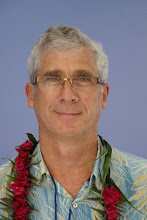
Yes the Celtic Church does perform marriages on the beautiful island of Oahu!!! And over the years I've performed marriages in homes, on the beaches, on golf courses, back yards, five star hotels, and of courses in Parke Chapel.
We offer reasonable rates, and use a beautiful Celtic liturgy. Please feel free to contact me if you have any questions or want to plan a wedding. You can also reach me though Facebook, which is linked on this site.
A few weeks ago, someone made a short video of a wedding performed on one of the local beaches here. He did a great job, and posted it on Youtube. I've attached it so you can enjoy.
Wedding video
Tuesday, April 20, 2010


Tonsure and why it matters.

The Celtic Church was their unique in its understanding of tonsure, and were somewhat out of the mainstream. Tonsure refers to the shaving of part or all of the hair on the head. According to F. L. Cross's The Oxford Dictionary of the Christian Church (1957), tonsure became popular in the 4th and 5th centuries and when it was linked with admission to the clerical state. According to Cross, three kinds of tonsure were practiced. The Western Church left a fringe of hair round the head, and symbolized the crown of thorns. This style is shown above and made famous by Friar Tuck. The Eastern Church shaved the entire head. The Celtic Church shaved in front of a line running from ear to ear. I recall from my Celtic studies that the Celts intentionally took a different position and reasoned this was a more authentic form of tonsure because it depicted servanthood, and was linked with slavery, albeit slaves of Christ. By contrast, the Roman tonsure was linked with the aristocracy.
Such a discussion reveals two very different kinds of Christianities. One linked with empire, the artistocracy, and magnificent cathedrals and choirs. The other, a more democratic, popular brand of Christianity marked by servanthood and community instead of buildings. Even though these contrasting ways of seeing things are 1400 years old, in my estimation they are also ways or viewing our common era. No doubt I am biased towards the Celtic understanding of what it means to follow Christ in today's world, and what it means to be a "church". We live during a time where service to others, and servanthood in Christ is a message which can both challenge and transform our predominantly pagan culture. This is why tonsure really matters. It's a symbol of service and commitment both to God and the community of Christ, the church. It represents an alternative kind of lifestyle, a lifestyle which is not built around oneself, and trying to get ahead in this world. On the contrary, the Christian faith in its most beautiful from, is represented in loving service to others, especially the most needy.
Friday, April 16, 2010
The Green Man

-small.jpg)
The Green Man John Matthews
A cardinal principle of Celtic Spirituality is a reverence and healthy respect for nature. And no doubt, this specific strain has attracted many to Celtic Spirituality especially those who are "green" in their thinking and concerned about environmental issues. And rightfully so. These are important Christian teachings, as Nature (our home) is something to be cherished and cared for, and not merely manipulated for profit. One theologian has penned the term "panentheistic" to describe what we refer to above. Not pantheism, but that God is "in" everything.
Such a spirituality rings true to my own experience. I recall as a boy, being drawn to the mystical quiet of the forest and would often go for walks in the woods that were above my home in Upper Montclair, New Jersey. The Green Man (Nature) also made its presence known to me in plants, fruit trees, and flowers, which I love to this day. Just the other day, I was cutting back on some wild bushes here in Hawaii, and realized that in just a few months, these branches will grow back. For those of us who love being out of doors, we realize that Nature is always there, pushing forth its roots, its growth, cracking through the cement and concrete or whatever we as humans place down on the Earth.
This is also the experience of others down through the ages. There is in fact, a long standing tradition in the Celtic world which shows both the power and terrible beauty that is Nature. Many of you might be familiar with the tradition of "the Green Man" who is a symbol for Nature, and a popular figure in British fiction and myth. In several churches, you might see an unusual carving or icon of a foliate head, that is a face which seems human, yet if you look closely, appear to be made of leaves. I've attached a picture from Rochester Cathedral in Britain so you can see what one looks like. I've also included a variation of this theme, and have have included a painting by the Italian Giuseepe Arcimboldo, who painting of a man consists of fruits and vegetables, to demonstrate how popular this notion was throughout Europe. And for something completely different, take a look at Arcimboldo's paintings which all seem to have a naturalistic theme to them.
You may be familiar with "Sir Gawain and the Green Knight". Set in Arthurian England, the tale tells the story of a Green man who plays a "Christmas game" where he will exchange blows with any man, on the condition that whoever gives the blow, will accept a blow in return. Gawain accepts the challenge, and going first, cuts off the head of the Green man. But to his surprize and horror, the Green man is not killed, but continues to speak though his head is depacitated!. We must also recall the influence of the Druids, who were known as "the people of the Oak" and who lived in forests. No doubt, the Christian Church "baptized" many of the local traditions as the young church began to take a greater role in the Celtic world.
One of the great values of knowing something about the tradition of the Green Man, is that it helps one to be aware of just how far the culture has come from an Earth based tradition. The development and growth of cities, caused many to leave rural areas, and move into urban communities. In addition, the forests of the world, were often depleted in order to build navies and cathedrals. As a result the landscape of the world has been significantly altered. Even so, Nature, the Green Man, raises his head in the most unusual ways and shapes. I am often struck by the beauty of flowers, the shape of trees, or the tinest plant which somehow works its way into a crosswalk or crack in a wall. These are reminders that Nature is there, and that the Green Man is alive and well.
Monday, March 15, 2010
The genius of St. Patrick

Patrick was born in the fourth century, although scholars are not sure exactly where; some say England, while other mention Scotland or Wales. We do know Patrick came from a family where religion played an important part. His father was a deacon, and his grandfather was a priest. As a youngster, Patrick was kidnapped by pirates and taken to Ireland where he was a slave for six years. This must have been a traumatic experience for the young lad, being taken from persons and places he held dear. To get through this time of crisis, Patrick began praying, and this is what he said in his own words:
"Tending flocks was my daily work, and I would pray constantly during the daylight hours. The love of God and the fear of him surrounded me more and more-and faith grew and the Spirit was roused, so that in one day I would say as many as a hundred prayers, and afte dark, nearly as many again".
Patrick has numerous dreams his whole life (see my article on Jung and dreams for more) which he took seriously. One night Patrick was guided in a dream to escape and return to Britain. Mysteriously and providentially, Patrick was able to locate a boat and sail back to Britain.
The next phase in Patrick's life centered around his theological training and education. Here too, scholars are not clear just how long a period we are talking about here. In my studies, I've seem estimates as much as 20 and 30 years. Fortunately theological studies are not quite as comprehensive these days!! During this time, Patrick met and befriended a holy man (who also happened to be a Bishop in the Church) named Germanus. Patrick was taken with Germanus's learning and piety, and as many would do, remained with his friend, soaking up his wisdom and piety. It was a formative time, one of Patrick's defining moments. Germanus was Patrick's soufriend, a key element in Celtic Christianity. And then again through a dream, Patrick was invited to move on and return to Ireland to "come back and walk amogst us once more". And Patrick did go, to a country far out of the mainstream of European life. His friends and contemporaries must have thought he had lost his mind.
I won't go into the many miracles that Patrick was involved in. Many others have done that. And you should read those accounts yourselves. I recommend Celtic Spirituality (1999) which contains the main texts in the Patrick Tradition, including Confessio and The Letter to the Soldiers of Coroticus. Personally, I am attracked to Patrick because of his wonderful personality which STILL comes through the pages of his writings. His personality seems larger than life, and there seems to be nothing he cannot do. He's God's man, so what else do you expect? Moreover, Patrick wisely immersed himself in Irish culture, learning the language, soaking up the stories, and thought forms, and used these to help spread the saving message of the Christian faith. Like so many others, Patrick could have in a paternalistic way stuck to what he was familiar and comfortable with, but he wisely chose not to. By becoming "Irish" Patrick was able to have an impact in a foreign land that is unparalled anywhere by anyone.
So on Wednesday, St. Patrick's Day, pause for a moment and think about what Patrick means to you.
Wednesday, March 10, 2010
A hole in one
The Britons, including the Celts, love to play games. And during my time in Britain, I often marveled at just the number of games that they invented. Cricket, soccer, tennis, and of course golf. There may be more, I just can't think of them of this late hour. I started playing golf for the very first time, when I was at St. Andrews. "Playing" would be the right word as for the first few years I simply was going out to the course and trying to hit the ball as hard as I could, with little success. I have fond memories of playing at St. Andrews. The choice course was the Eden or the Jubilee as the Royal and Ancient course was just too expensive. Several of us would often sneak out about three in the afternoon just when the course attendent would be leaving. To this day, I recall the wonderful views of St. Andrews in the distance, as we would be standing near the shoreline, ready to launch our next golf balls into the nearby bay.
Golf has grown on me over the years. I began "playing" on a regular basis when I came to Hawaii ten years ago. There are some amazing courses here. My home course, some four miles or so from my home, is called the Pali course. The course is nestled against volcanic mountains with wonderful views of the ocean. Seems a bargain to pay only $9.50 for nine holes. Lost many a ball there.
A few weeks back, something amazing happened. The day the tsnami was supposed to hit, a buddy and I played golf at the Bayview, another golf course in Kaneohe. On the fourth hole, I teed off with a seven iron at a hole about 150 yards away. To my amazement, it went in for a hole in one. I still can't believe it.
These are lessons in persistence to me. It's no secret. If you want to be good at anything, your job, prayer, write, understand theology, or golf, you've got to get out there and get in the game. Even when you stink up the course-as I did in my next game of golf-one must tame the will to see things through. And when you do, it's amazing what you can accomplish. I may never again hit another hole in one, but by continually playing, I'll get better and better. This is one of the reasons I love golf and football so much. They are parables of life.
Golf has grown on me over the years. I began "playing" on a regular basis when I came to Hawaii ten years ago. There are some amazing courses here. My home course, some four miles or so from my home, is called the Pali course. The course is nestled against volcanic mountains with wonderful views of the ocean. Seems a bargain to pay only $9.50 for nine holes. Lost many a ball there.
A few weeks back, something amazing happened. The day the tsnami was supposed to hit, a buddy and I played golf at the Bayview, another golf course in Kaneohe. On the fourth hole, I teed off with a seven iron at a hole about 150 yards away. To my amazement, it went in for a hole in one. I still can't believe it.
These are lessons in persistence to me. It's no secret. If you want to be good at anything, your job, prayer, write, understand theology, or golf, you've got to get out there and get in the game. Even when you stink up the course-as I did in my next game of golf-one must tame the will to see things through. And when you do, it's amazing what you can accomplish. I may never again hit another hole in one, but by continually playing, I'll get better and better. This is one of the reasons I love golf and football so much. They are parables of life.
Monday, March 8, 2010
To Skype or not to Skype!
I've had the zaniest month of "blog interrupted"! Work projects, outside activities, church stuff-you name it. I've missed dearly the opportunity to offer postings and promise to be a better blogger, one day at a time.
Of the many events over the last month of which I could blog, I decided just to focus on one. "Skype". That's right I said "Skype". I had heard about Skype from some friends and finally decided to break down, purchase a better webcam than the one on my Dell, and well, begin Skyping. This has been a wonderful decision, bringing me great joy. I can't tell you how much I enjoy speaking and seeing my wife who is six thousand miles away. Best of all, Skype is a free telephone and webcam service that allows you to speak and see persons all over the planet. I don't know how they do, but it is an amazing service, perhaps being a glimpse into what telephone service in the future might become.
My entry into the world of blogging, Facebook, and now Skype, are a indication of just how much technology is becoming part of one's everyday experience. And I am not geekie by any means. What amazes me is just commonplace all of this social networking has become. It's simply the way people do things these days. For example, I recently learned about a "Twestival", translation "a Twitter festival" will be taking place in several weeks. And I only know this because I made a decision to throw myself into the world of social networking.
Most of all, this is a great lesson in adaptability, of being open to change, and of new possibilities for growth. And it's here where something from the Celtic tradition can be of help. Deep at the very core of Celtic spirituality lies a sense of mystery, and creativity. The Celts were not fundamentalists (like the ones we see on TV today). Their Orthodox roots of the Desert Fathers and Mothers reminded them that it is folly to think that one is ever in "possession" of the Truth. As my spiritual director would remind me "you don't have spirituality, spirituality has you". It feels good to grow, to learn something new, to be in a place now, that one was not in the past. If one falsely imagines that "have it", what incentive is there to grow?
It could be Skype, it could be a book, or a new friendship. These are the gateways to personal growth and development. They are symbols in a sense, that it is important to progress in life, take on new ideas and projects, and learn to see things in a different way. Such a perspective also must apply to Scripture. Who could ever be arrogant enough to say that they know the full meaning of a given text? Years ago, I recall reading John Henry Newman's great autobiography, Apologia Pro Vita Sua. In the opening chapters, Newman quotes one of the classical authors of old, which I will paraphrase. Change is an evidence of life, and that hopefully in one's life, one can make many changes.
Of the many events over the last month of which I could blog, I decided just to focus on one. "Skype". That's right I said "Skype". I had heard about Skype from some friends and finally decided to break down, purchase a better webcam than the one on my Dell, and well, begin Skyping. This has been a wonderful decision, bringing me great joy. I can't tell you how much I enjoy speaking and seeing my wife who is six thousand miles away. Best of all, Skype is a free telephone and webcam service that allows you to speak and see persons all over the planet. I don't know how they do, but it is an amazing service, perhaps being a glimpse into what telephone service in the future might become.
My entry into the world of blogging, Facebook, and now Skype, are a indication of just how much technology is becoming part of one's everyday experience. And I am not geekie by any means. What amazes me is just commonplace all of this social networking has become. It's simply the way people do things these days. For example, I recently learned about a "Twestival", translation "a Twitter festival" will be taking place in several weeks. And I only know this because I made a decision to throw myself into the world of social networking.
Most of all, this is a great lesson in adaptability, of being open to change, and of new possibilities for growth. And it's here where something from the Celtic tradition can be of help. Deep at the very core of Celtic spirituality lies a sense of mystery, and creativity. The Celts were not fundamentalists (like the ones we see on TV today). Their Orthodox roots of the Desert Fathers and Mothers reminded them that it is folly to think that one is ever in "possession" of the Truth. As my spiritual director would remind me "you don't have spirituality, spirituality has you". It feels good to grow, to learn something new, to be in a place now, that one was not in the past. If one falsely imagines that "have it", what incentive is there to grow?
It could be Skype, it could be a book, or a new friendship. These are the gateways to personal growth and development. They are symbols in a sense, that it is important to progress in life, take on new ideas and projects, and learn to see things in a different way. Such a perspective also must apply to Scripture. Who could ever be arrogant enough to say that they know the full meaning of a given text? Years ago, I recall reading John Henry Newman's great autobiography, Apologia Pro Vita Sua. In the opening chapters, Newman quotes one of the classical authors of old, which I will paraphrase. Change is an evidence of life, and that hopefully in one's life, one can make many changes.
Tuesday, February 16, 2010
Mental Health Ministries
If you've never heard of NAMI, the National Alliance of Mental Illness, it's an agency worth learning something about. Much of what I know about NAMI comes from my work, and of their strong emphasis on peer led groups and services. NAMI, which is a national group, also has a part which is trying to work more closely with clergy and churches. That subsection of NAMI is called Faithnet.
What a wonderful opportunity and work for churches to get involved with! The national statistics on mental illness are staggering, and indicate that as much as a quarter of the population will experience some kind of mental illness in their lifetime. This would include illnesses such as depression, anxiety, schizophrenic, bipolar disorder, and PTSD, just to name a few.
Several churches throughout the country are forming ministries for people with mental illnesses. In some cases, these ministries are places were people would come and receive helpful information, spiritual direction, as well as finding support. This is exciting. This is needed. This is what ministry is all about. Reaching out to others in need and trying to help them along the parth to mental health recovery. If you're interested in learning more you can contact either NAMI directly, or feel free to email me.
What a wonderful opportunity and work for churches to get involved with! The national statistics on mental illness are staggering, and indicate that as much as a quarter of the population will experience some kind of mental illness in their lifetime. This would include illnesses such as depression, anxiety, schizophrenic, bipolar disorder, and PTSD, just to name a few.
Several churches throughout the country are forming ministries for people with mental illnesses. In some cases, these ministries are places were people would come and receive helpful information, spiritual direction, as well as finding support. This is exciting. This is needed. This is what ministry is all about. Reaching out to others in need and trying to help them along the parth to mental health recovery. If you're interested in learning more you can contact either NAMI directly, or feel free to email me.
Subscribe to:
Posts (Atom)